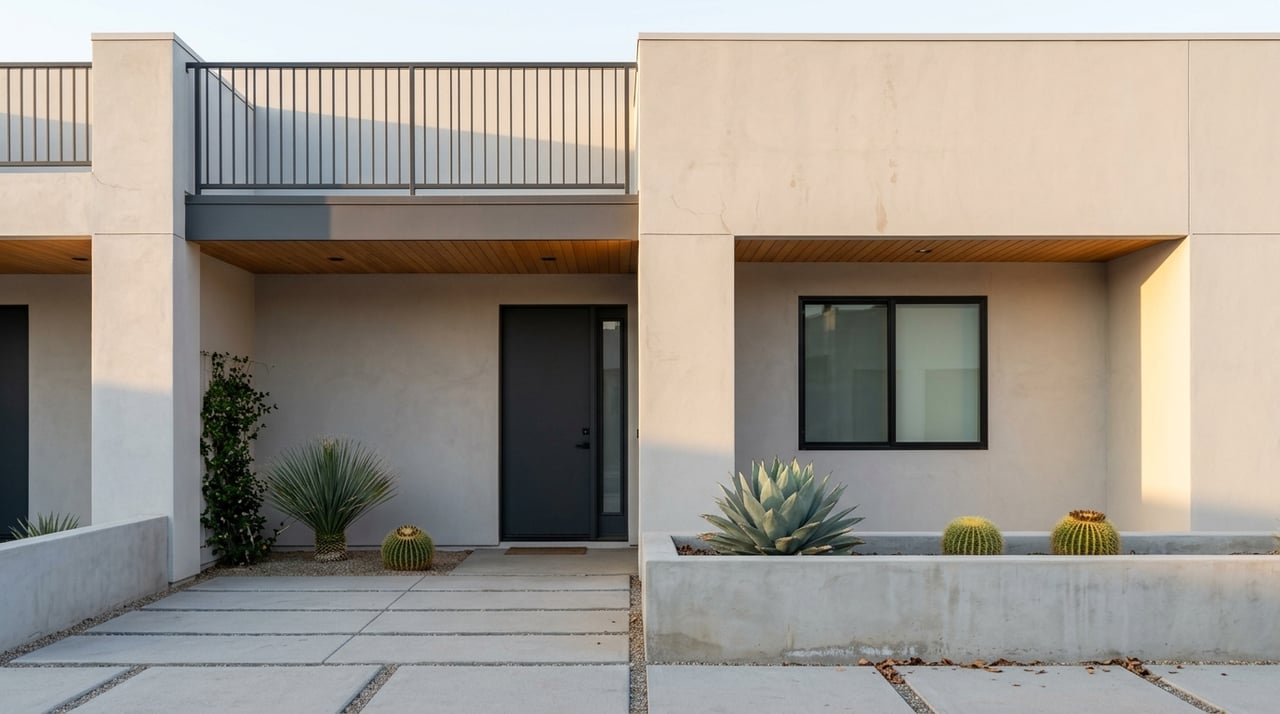
Tempe Condos Versus Single Family Homes: How To Choose
June 25, 2026
June 25, 2026
If you are trying to decide between a condo and a single-family home in Tempe, you are not alone. This is one of the most common questions for buyers who want the right mix of budget, maintenance, location, and lifestyle. The good news is that Tempe gives you strong options in both categories, and once you understand the tradeoffs, the choice becomes much clearer. Let’s dive in.
Tempe is not a one-size-fits-all housing market. It is a denser, more transit-oriented city than many nearby areas, with bus routes, light-rail stops, free Orbit circulators, and a streetcar system that connects key parts of the city.
That local setup helps explain why attached housing plays such a big role here. Tempe’s 2022 housing profile shows 38% single-family detached housing, 24% attached housing in buildings with fewer than 10 units, and 33% attached housing in buildings with 10 or more units. In other words, condos and similar homes are not a niche option in Tempe. They are a major part of the market.
Before you compare square footage or monthly payments, think about how you want to live. If you want fewer exterior chores and easy access to transit corridors, downtown Tempe, or ASU-adjacent areas, a condo or townhome may line up well with your goals.
If you want more privacy, more separation from neighbors, or more control over your exterior space, a single-family home may be the better fit. The right answer usually comes down to how much maintenance you want to handle yourself and how comfortable you are sharing responsibilities through an association.
In Arizona, a condominium is a form of ownership where you own your unit separately, while common areas are owned together by the unit owners. Under state law, the association is responsible for maintaining, repairing, and replacing common elements, while the unit owner is responsible for maintaining, repairing, and replacing the unit itself.
That division of responsibility is one of the biggest reasons buyers choose condos. You may have fewer direct exterior maintenance tasks, but you also rely more on the association’s budget, reserve planning, insurance, and decision-making.
A condo can feel simpler because you are not usually coordinating every exterior repair yourself. At the same time, your ownership experience depends on how well the association manages the property.
If the association is financially stable and keeps up with maintenance, that can be a real advantage. If reserves are weak or repairs have been delayed, that can create added risk through special assessments or financing issues.
A single-family home usually gives you more control over the property itself. In most cases, you are the one handling the roof, yard, systems, and ongoing upkeep.
That control can be appealing if you want flexibility and privacy. It also means you should be ready for both routine costs and larger repair items over time.
This is an important point in Tempe. A detached home is not automatically free from HOA rules or dues.
Arizona law allows planned communities to have associations that own and operate shared areas and assess members for those costs. Some detached homes in Tempe are part of planned communities, so you should not assume a single-family home comes without dues, rules, or shared maintenance obligations.
One of the biggest mistakes buyers make is relying on the exterior style of a home to tell them how ownership works. In Arizona, a townhome might be structured as a condominium in one community and as a planned community in another.
That is why the governing documents matter so much. The CC&Rs, bylaws, and resale packet are the real source of truth for who handles the roof, exterior walls, landscaping, parking, and shared amenities.
When buyers compare condos and single-family homes, it is easy to focus only on mortgage principal and interest. In Tempe, that does not give you the full picture.
The city’s housing profile shows a median monthly owner cost with a mortgage of $1,828, a median gross rent of $1,743, and a median value of owner-occupied homes of $455,400. For a practical comparison, you should look at your full carrying cost, not just the loan payment.
A condo may lower your direct repair workload while adding HOA dues. A single-family home may reduce your dependence on an association while increasing your personal maintenance responsibility.
HOA dues are not just an extra line item. In Arizona, assessments help pay for common expenses and reserve allocations, and they are generally based on an annual budget.
That means the fee may support items such as exterior upkeep, common landscaping, parking areas, shared amenities, insurance for common elements, and future reserve needs. The key question is not simply whether a property has dues. It is whether the dues are reasonable for what they cover.
If you are considering a condo or another association-governed property, the financial health of the project matters. Arizona requires detailed resale disclosures for condos and planned communities, including governing documents, the current operating budget, the most recent annual financial report, reserve information if available, insurance information, assessment status, and pending lawsuits.
That makes association review a core part of your buying decision. It is not a back-office detail.
Shared ownership can work very well when the project is well run. It becomes more complicated when the association has been underfunded or major repairs have been postponed.
Your best fit often depends on what you value most in this season of life. Tempe offers enough variety that both paths can make sense.
This can appeal to first-time buyers, downsizers, and relocating buyers who want convenience. The tradeoff is that you may have less privacy and more dependence on association rules and finances.
This can work well if you want room to spread out and are comfortable taking on more direct property care. Just remember that some detached homes still sit within planned communities, so the presence of an HOA is something to verify, not assume away.
If you are torn between the two, use a side-by-side comparison based on how the home will actually function for you. Start with the issues that affect your budget, time, and peace of mind the most.
Ask these questions for every property you consider:
Those questions usually reveal more than the property label alone.
In Tempe, choosing between a condo and a single-family home is not just about size or style. It is about ownership structure, monthly costs, and how responsibilities are divided.
A calm, detailed review can help you avoid surprises and choose the property type that truly fits your goals. If you are relocating, buying your next home, or narrowing down neighborhoods in Tempe, that extra clarity can save time and stress.
When you are ready to compare options with a practical, local perspective, Cynthia Brown can help you evaluate the numbers, the documents, and the day-to-day realities so you can move forward with confidence.
Stay up to date on the latest real estate trends.
Work with a trusted real estate professional with 18+ years of experience in buying, selling, and negotiating. Serving the East Valley and Greater Phoenix, specializing in trust and relocation sales for a seamless, stress-free experience.