In Tempe, "Room for a Casita" Costs More Than the Listing Lets On
October 22, 2026
October 22, 2026
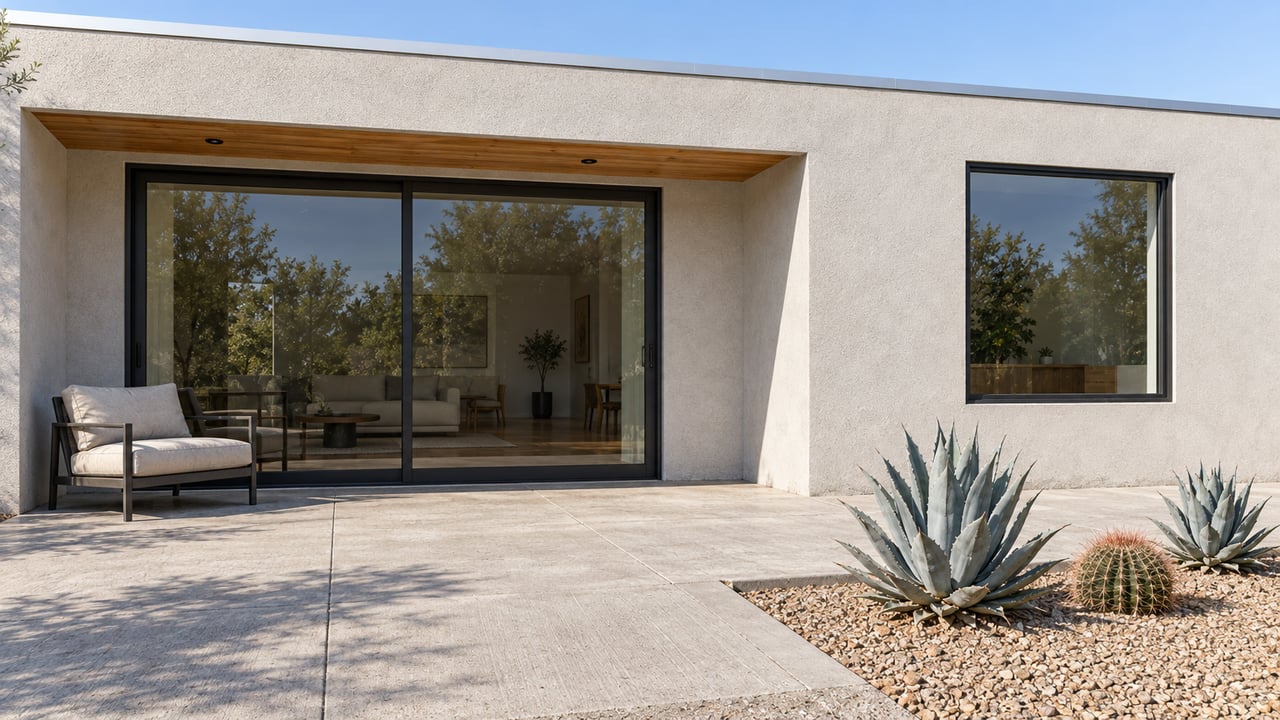
Plenty of Tempe single-family listings now point to the backyard and call it ADU potential. The legal side holds up. State law and Tempe's ordinance allow a detached casita on nearly every single-family lot in the city, and most Tempe subdivisions have no HOA rules that could block one. The economics are less generous. A high-quality ADU in Tempe runs $180,000 to $260,000, based on local builder estimates the city cites. In September 2026, the median Tempe townhouse or condo sold for $300,000.
So building a casita costs 60% to 87% of what a complete condo sells for, including the condo's share of land. That gap explains why so few have been built. It also means a home with a finished, permitted ADU and a home with an empty backyard are different products, and buyers comparing them should price them differently.
Arizona House Bill 2928, signed in 2025, amends the ADU statute that HB 2720 created in 2024. Cities with more than 75,000 people must allow the following on any lot where a single-family home is allowed:
Tempe's ADU page follows those limits. It also notes that an HOA's covenants, conditions and restrictions can be stricter than city rules and can prevent an ADU the city would allow. Then it adds that this "is not an issue in most residential subdivisions in Tempe, which do not have HOAs or CC&Rs."
That makes the legal option unusually wide in Tempe. The constraint shows up in the city's permit records.
Tempe publishes an ADU permit dashboard and says it has tracked ADU permits since late 2020. In mid-October 2026 the counts were:
| Dashboard status | ADUs |
|---|---|
| Completed | 38 |
| Issued | 58 |
| In review | 22 |
| Applied | 1 |
"Issued" means the city has granted permission to build. It doesn't mean construction has started. Across a city of mostly single-family neighborhoods, 38 completed ADUs is a very small number. Volumes are modest elsewhere too. The ASU Morrison Institute's August 2026 housing report counted 106 ADU permits in Phoenix in Q4 2025 and called permit volumes modest compared with existing single-family housing stock.
With few HOAs and broad state rules, the slow pace in Tempe comes down to cost and return.
Start with the two prices a buyer is weighing, then add rents. Every figure below is from fall 2026:
| Figure | Amount | Source and window |
|---|---|---|
| Builder estimate for a quality Tempe ADU | $180,000 to $260,000 | City of Tempe, undated |
| Tempe single-family median sale price | $525,000 | ARMLS, September 2026 |
| Tempe townhouse/condo median sale price | $300,000 | ARMLS, September 2026 |
| Tempe one-bedroom median rent | $1,171 | Apartment List, October 2026 report |
| Tempe two-bedroom median rent | $1,316 | Apartment List, October 2026 report |
At the September median, an ADU adds 34% to 50% to the cost of a $525,000 house. Apartment List's October 2026 report shows Tempe rents down 1.0% in September and 3.1% year over year. RentCafe's average rents, based on Yardi Matrix data and updated September 30, are higher: $1,501 for a one-bedroom and $1,807 for a two-bedroom. The two sources measure different things. One is a median estimate and the other is an average rent in buildings with 50 or more units.
Taking a one-bedroom-sized casita at either rent level, a full year of rent comes to about $14,000 to $18,000 before vacancy, insurance, taxes, maintenance or financing. Divide that by a $180,000 to $260,000 build cost and the gross return lands around 5% to 10%. That's before any expenses.
The condo market sharpens the comparison. In September 2026, Tempe had 240 townhouses and condos for sale, up 49.1% from a year earlier. Months of supply rose from 4.2 to 7.1. That's a buyer's market for the property type an ADU competes with most directly, because a condo is also a small, separate home in Tempe. A buyer who wants a second income-producing unit can often look at a finished condo for not much more than the cost of building a casita from scratch.
Some owners look at a small lot and plan to build up. Tempe's ADU page says ADU height follows the zoning district limit, typically 30 feet. It also says that based on a December 17, 2025 Board of Adjustment decision, two-story ADU designs now need a Use Permit. That adds a review step before construction.
Two-story casitas have also drawn public attention. In fall 2025 the Arizona Republic reported on a proposed two-story ADU in a central Tempe neighborhood that more than 300 neighbors petitioned against. According to the Tempe Independent's March 2026 update, the plan was changed to one story and the application was rescinded. On March 5 the City Council approved the appeal as moot, so it never ruled on the two-story design itself.
For a buyer, this narrows what ADU potential means on a smaller lot. A one-story casita has to fit within the district's lot coverage limits. Going up adds a Use Permit to the process.
Standard plans are designs the city has already reviewed for code compliance. They're meant to save design time and permit fees. Tempe picked ten winners in the 2025 AARP ADU Design Challenge, including The Retreat by Vinson Studios PLLC, Desert Mass by Studio Zhan, Casita SAMA by studioSAMA, TempePOD by Richard Kennedy Architects and The Townlake by Jonathan Cornell. Tempe News reported that the city waived plan-review fees for the winning plans, saving at least $2,500, and capped designers' licensing fees at $5,000.
Winning designs can't be licensed until each one finishes the standard-plan review. Tempe's standard plan library currently lists one ADU available for licensing: The Retreat, a 600-square-foot studio. The city says it has had to accept standard-plan submittals since July 1, 2026, so the list may grow. For now, an owner who wants a one-bedroom or a two-bedroom generally needs a custom design and the full plan review.
The savings are real but small against a six-figure build. The $2,000 to $6,000 range the city cites for pre-approved plans comes to roughly 1% to 3% of a $180,000 to $260,000 project.
Everything above makes a finished, permitted ADU the scarce asset. The buyer of such a home skips the build cost, the design process and any height review. That's why sellers with one should show the permit history in their listing materials rather than just describe the backyard.
A few city rules affect how that unit can be used and taxed, and they belong in any seller's disclosure prep:
The overall market gives these homes room to stand out. In September 2026, Tempe single-family homes took a median 79 days to sell, up from 68 a year earlier. Inventory reached 288 homes, or 3.9 months of supply. Buyers have choices, and a home with a finished second unit doesn't have to compete with every other listing on price alone.
Can I build a casita if my Tempe home is in an HOA? The city allows it, but your CC&Rs may be stricter. Tempe's ADU page says to check your HOA's rules first.
Does an ADU make my home a duplex for property tax? Not according to the city. Tempe says a home with an ADU stays in the residential class assessed at 10%. The Maricopa County Assessor has the details for your parcel.
Can I put a second story on a casita? Tempe currently requires a Use Permit for two-story ADU designs, based on the December 17, 2025 Board of Adjustment decision.
This post is general information, not legal, tax or financial advice. Before you build, buy or list based on an ADU, check your specific property with the city, your HOA, a tax professional or a lender.
If your Tempe home already has a permitted casita or legal guest quarters, that unit is one of only a few dozen completed in the city, and it should be priced and presented that way. Cynthia Brown can pull the permit history together, stage the unit so buyers see it as a second home, and put a number on what it adds. Get your free home valuation.
Stay up to date on the latest real estate trends.
Work with a trusted real estate professional with 18+ years of experience in buying, selling, and negotiating. Serving the East Valley and Greater Phoenix, specializing in trust and relocation sales for a seamless, stress-free experience.